TNE.ai Dashboard — AI Model Monitoring Platform
Time frame: May 2025 – June 2025
Course: CS 394 Agile Software Engineering
Collaborators: Computer Science Major (x5)
Overview
TNE.ai is a web application designed for ML operations teams to monitor AI model performance across deployments. The platform transforms low-level logs and metrics into actionable insights through centralized visualization and analysis.

Understanding the Problem
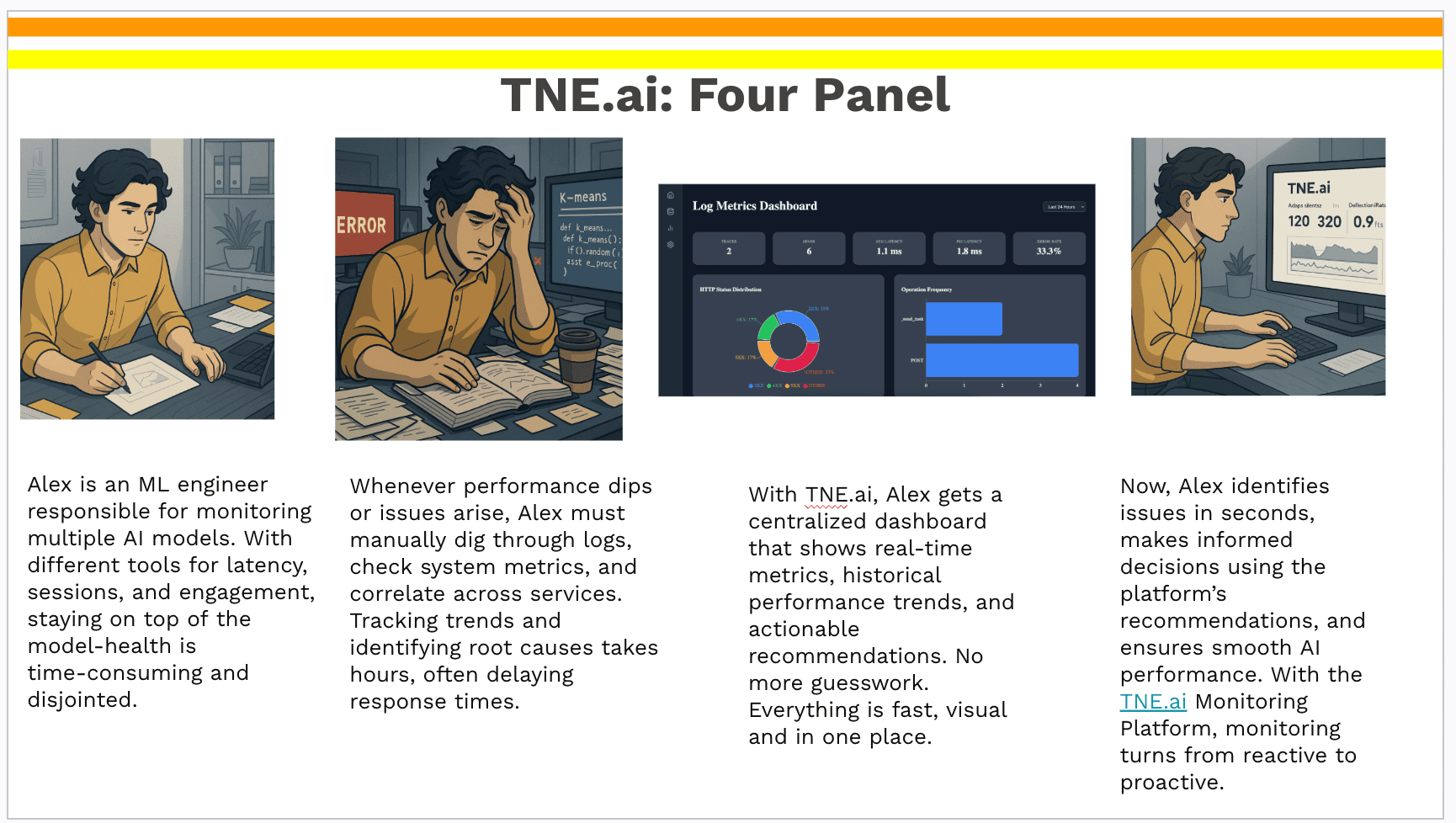
Modern AI engineers rely on multiple disconnected tools to monitor latency, system errors, and engagement metrics. When performance issues arise, identifying root causes often requires manually searching through logs across systems — a slow and fragmented process.
Our goal was to design a centralized dashboard that transforms scattered low-level metrics into actionable insights, allowing teams to diagnose issues quickly and shift from reactive troubleshooting to proactive monitoring.
Agile Development Across Teams
Development occurred across multiple teams working simultaneously toward a shared product vision. Rotating product owners coordinated priorities each week, ensuring alignment between engineering progress and client expectations.
Weekly client meetings and tribe-wide Slack communication allowed rapid feedback cycles. Agile tracking through burnup charts and shared backlogs helped balance feature scope, manage dependencies, and maintain steady progress toward demo milestones — enabling frequent integration while minimizing merge conflicts.


System Architecture and Implementation
The platform processes uploaded JSON log data through a structured three-phase pipeline designed to convert raw system activity into interpretable performance metrics.
Log data is first parsed and standardized into structured query records. The system then aggregates performance indicators such as latency distributions, failure rates, and response patterns. Finally, the dashboard visualizes trends through interactive charts that allow engineers to drill into model behavior across deployments — ensuring complex operational data can be interpreted quickly without manual log inspection.

Outcome
The final product delivered a unified monitoring experience capable of visualizing performance trends across AI systems while enforcing standardized data ingestion through structured JSON uploads.

Key Learnings
The project emphasized the importance of communication, rapid iteration, and balancing technical ambition with delivery timelines in a multi-team environment.
Communication
Frequent Slack updates and client meetings kept distributed teams aligned and reduced integration conflicts.
Scoping Tradeoffs
Dropping LLM-generated recommendations allowed the team to focus on delivering a reliable, polished core product.
Iteration Speed
Rapid feedback cycles and shared backlogs helped balance feature scope with demo milestones.
